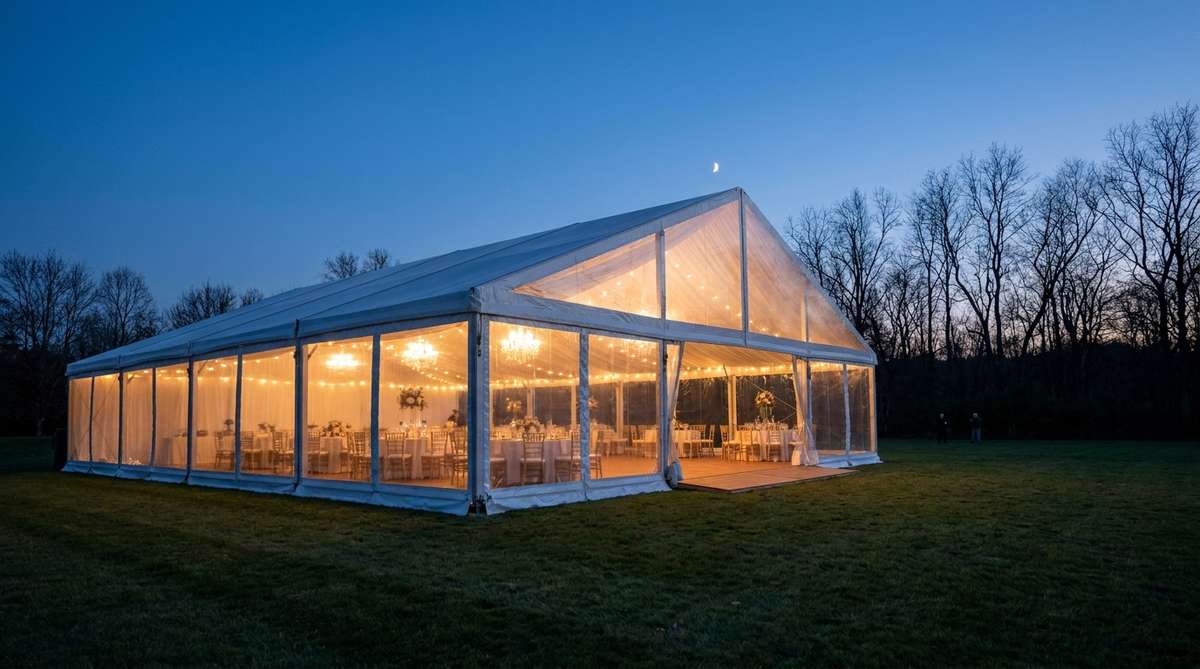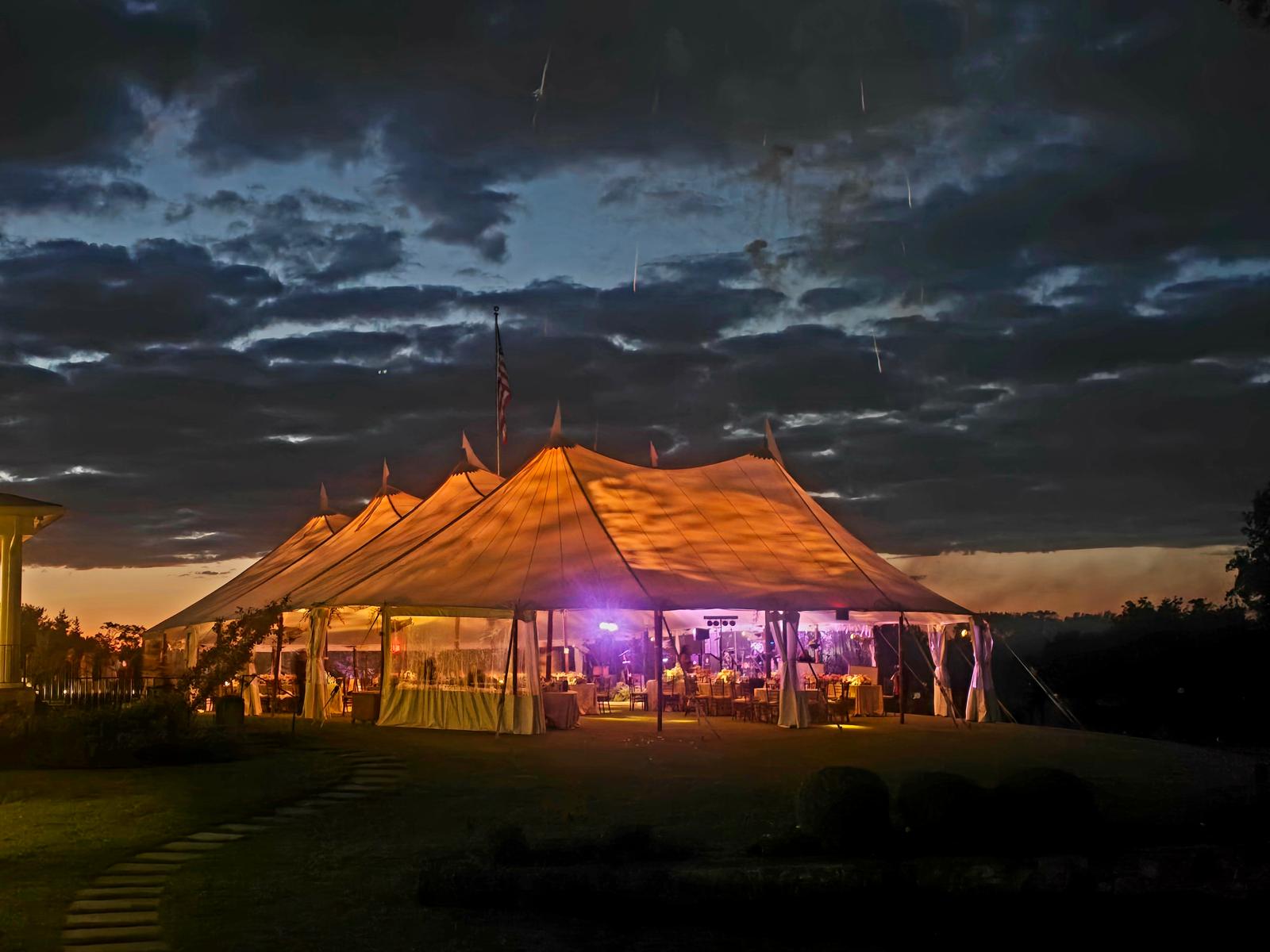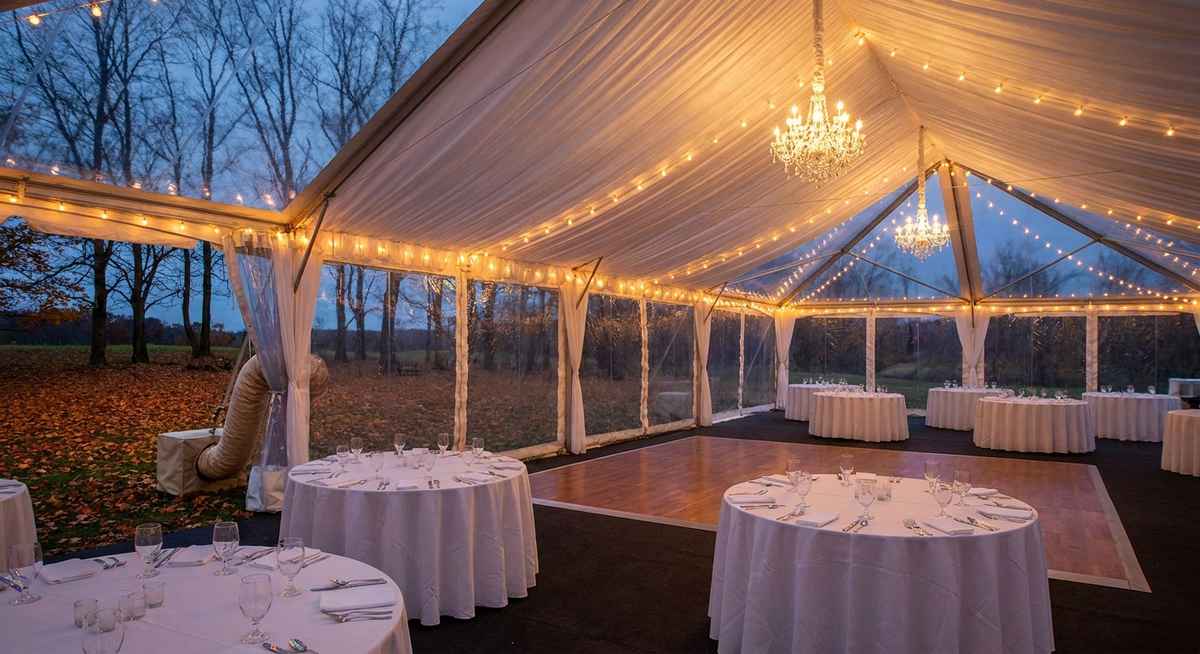
Nobody books a tent because they are excited about permitting. But the permit is the thing that decides whether your event happens, and it is the item most often discovered late — usually by a client who assumed the venue handled it, or that the tent company handled it, or that a tent is not really a building so surely none of this applies.
A tent is, for code purposes, very much a building. Here is what the approval process actually involves in Eastern Pennsylvania, New Jersey and Delaware, what an inspector will ask for, and which parts are yours versus ours.
When You Need a Permit
The trigger is usually size, occupancy and duration, and it varies by municipality — which is the single most important sentence in this article. Two townships fifteen minutes apart can have meaningfully different thresholds and submission timelines.
That said, the framework nearly everyone builds from is Chapter 31 of the International Fire Code, covering tents and other membrane structures. The common patterns:
- Tents over roughly 400 square feet generally require a permit
- Occupancy thresholds trigger additional egress, exit signage and lighting requirements
- Temporary structures are limited to a defined installation window — commonly 180 days within any twelve-month period on a single premises
- Anything with cooking, open flame, or generator power brings additional review
Longer installations, or anything intended to stay up seasonally, are a different conversation entirely and may be reviewed closer to permanent construction.
The Flame Certificate Everyone Forgets
Before a permit is issued, the code official will want a certificate from an approved testing laboratory showing that the tent fabric, sidewalls, drops and tarps meet the flame propagation performance criteria of NFPA 701.
This is not optional and it is not something you can produce on the day of the event. It is a document that comes from the manufacturer and the rental company — meaning it is genuinely ours to supply, not yours to chase.
Where hosts get caught is decor. Bunting, draping, fabric ceiling treatments, and combustible decorative materials brought in by a designer or florist are also subject to flame propagation requirements. If your designer is bringing 200 yards of fabric, someone needs to have that conversation before load-in, not during inspection.
Engineering, Anchoring and Wind
This is the part of the process that has gotten noticeably more rigorous, and rightly so.
Larger tents — and most structure tents — are engineered systems with documented load ratings. Reviewers increasingly ask for stamped engineering drawings showing the structure, the anchoring method, and the design wind loading. Anchoring is not a detail; it is the whole ballgame. The difference between a staked installation in soil and a ballasted installation on asphalt or a plaza deck changes the engineering, the footprint, and sometimes the tent you can use at all.
Practical implications for a host:
- Surface matters enormously. Tell us what is under the tent before you tell us the guest count. Soil, turf, asphalt, concrete, pavers over a structure, or a parking deck each produce a different anchoring plan.
- Utilities get located before stakes go in. Underground electric, irrigation, septic fields and fiber all end tent installs badly.
- Weather plans are part of the permit conversation. Many jurisdictions expect a documented threshold at which the structure is evacuated. That is a real operational plan, not a formality.
Our event planning checklist walks through the site questions that determine most of this, and the tent terminology guide is genuinely useful if you are reading a drawing for the first time and are not sure what a keder track or a cross cable is.
Egress, Lighting and Exits
Once occupancy crosses a threshold, the requirements stack quickly: a minimum number of exits, minimum exit widths, illuminated exit signage, means-of-egress lighting, and clear aisle dimensions that must be maintained by the layout — which means the seating plan and the code requirements have to be designed together rather than sequentially.
This is the most common source of late-stage layout changes. A floor plan that works beautifully at 180 guests can become non-compliant at 240 because the exit count changed. Settle occupancy early.
Heat, Power and Open Flame
Anything that burns or generates gets its own review. Heaters must be listed for the application and located per clearance requirements. Fuel storage has separation rules. Generators have placement and guarding requirements, and the distribution has to be protected where it crosses walkways.
Catering is the frequent surprise. Cooking under or adjacent to a tent brings additional separation, extinguisher and sometimes suppression requirements. If the caterer plans to cook on site, that needs to be in the permit conversation from the start — not raised the week before. Our climate control and power equipment is specified with these requirements in mind, which removes a large category of last-minute problems.
Who Does What
A fair division of responsibility, and the one we work to:
We provide: the tent and its engineering documentation, NFPA 701 flame certificates, anchoring plan, layout drawings, and equipment that is listed and appropriate for temporary structure use.
You or your venue provide: site access and authority to install, utility locations, the guest count and layout intent, and any decor documentation from third-party vendors.
We handle together: the submission timeline. Some municipalities want two weeks. Some want six. Finding out which one you are in should happen when the date is booked, not when the deposit is paid.
Start the Conversation Early
Thirty years and tens of thousands of installations across Eastern PA, New Jersey and Delaware have taught us that permitting problems are almost always calendar problems. The requirements are knowable. The timeline is the thing that surprises people.
If you have a date, a rough guest count and an address, we can tell you what the approval path looks like before you commit to anything else.
EventQuip — 1084 Bethlehem Pike, Montgomeryville, PA 18936 — https://www.eventquip.com