A summer tent looks magical at 5 p.m.—and feels like a greenhouse by the time the toasts start if it isn’t cooled properly. Across the Philadelphia metro, Eastern PA, New Jersey, and Delaware, June-through-September humidity is no joke, and guest comfort can make or break an otherwise flawless event. After 30+ years tenting weddings, galas, and corporate functions in this region, here’s how we keep everyone cool—and safe—under canvas.
Why a Summer Tent Gets Hot (and Why It Matters)
A tent is essentially a large enclosed volume sitting in direct sun. Without active cooling, three things stack up fast:
- Solar gain — sunlight heats the tent fabric and everything beneath it
- Trapped humidity — Mid-Atlantic summer air is heavy, and a packed tent traps it
- Body heat and equipment — 150 guests, catering, and lighting all add measurable warmth
The result is a space that can run significantly hotter than the outdoor temperature by mid-afternoon. That’s not just uncomfortable—it’s a safety consideration. OSHA highlights that heat illness risk climbs in hot, humid, enclosed environments and that proactive cooling and airflow are core preventive measures (osha.gov). The National Weather Service likewise notes that humidity makes the air feel hotter and raises heat-stress risk (weather.gov). For a multi-hour event, planning for cooling isn’t a luxury—it’s part of hosting responsibly.
Climate Control vs. “Just Add Fans”
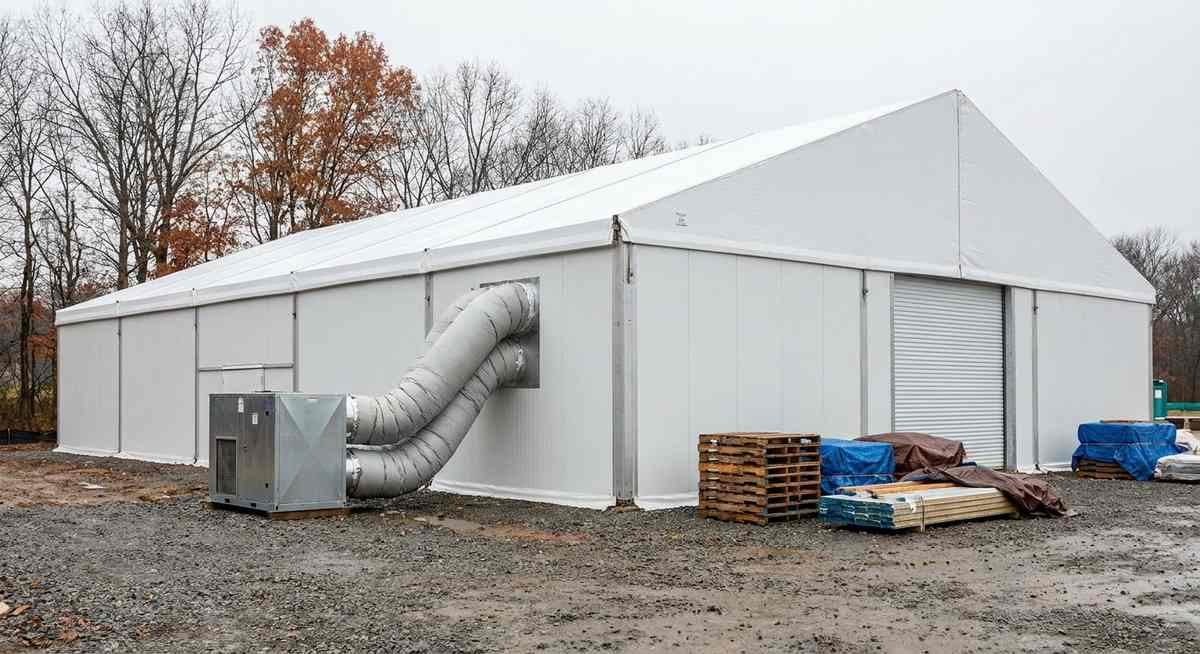
Fans move air, which helps a little, but they don’t lower temperature or remove humidity. Real comfort at a summer event comes from mechanical climate control: properly sized air-conditioning units ducted into a sealed tent. The difference is dramatic—fans give you a warm breeze; climate control gives you a genuinely comfortable 70-something-degree room your guests forget is even a tent.
Our approach to tent HVAC and cooling is built around matching equipment to the actual space. You can see the climate-control options on our climate control and HVAC page.
Sizing the Cooling Load: What We Actually Calculate
“How big an AC unit do I need?” depends on more than square footage. When we spec a climate-controlled tent, we factor in:
- Tent size and ceiling height — taller tents have more volume to condition
- Guest count — every person adds heat and humidity
- Sun exposure and tent type — a clear-top tent in full sun behaves very differently from a fully opaque structure tent
- Time of day and event length — a noon-to-evening event hits peak heat mid-event
- Catering and lighting load — hot kitchens and stage lighting add real BTUs
Getting this right is the whole game. Undersize the cooling and the tent never catches up; oversize it and you waste power and budget. Three decades of regional events means we’ve dialed this in for Philadelphia-area conditions specifically.
Tent Type Makes a Big Difference
The structure you choose directly affects how easy (and efficient) it is to cool:
- Structure tents are the gold standard for climate control. Their rigid, sealed walls hold conditioned air far better than a basic pole tent, making them ideal for hot-weather galas and corporate events. Explore them on our structure tents page.
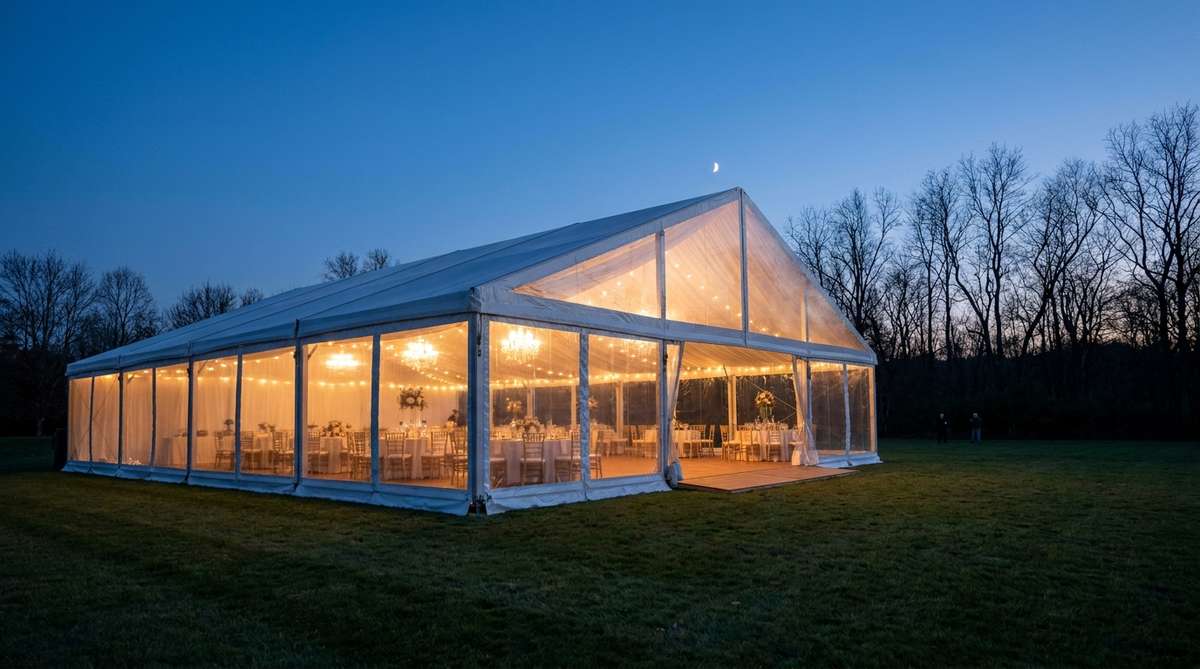
- Clear-top tents deliver that stunning open-sky look couples love—but glass-like tops mean more solar gain, so they demand correctly sized cooling to stay comfortable. See our clear-top tents page.
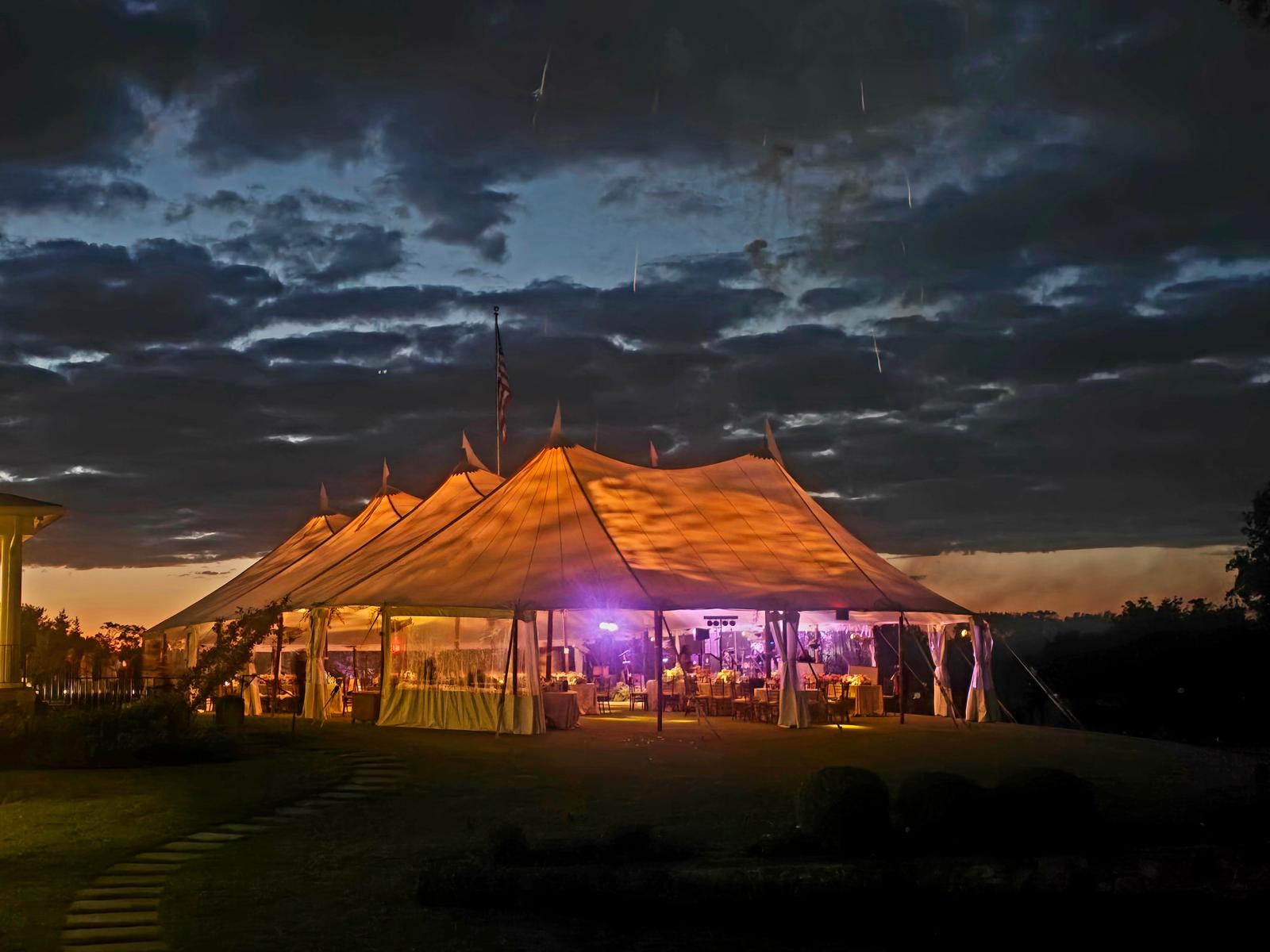
- Frame and pole tents can be cooled too, with attention to sealing the perimeter so the conditioned air doesn’t leak out.
We’ll help you weigh aesthetics against cooling efficiency so you get the look and the comfort.
Sealing the Envelope: Cooling Only Works If the Tent Holds It
You can have the right AC tonnage and still bake if the tent leaks air. For summer events we focus on:
- Solid sidewalls installed and closed during peak heat
- Sealed seams and access points so cool air stays in
- Proper ducting that distributes air evenly—no cold spot by the unit and a hot back corner
- Flooring that creates a clean, sealed base and a more finished, controllable environment
These details are what separate a tent that feels air-conditioned from one that merely has an AC unit running. Our full lineup of supporting infrastructure—flooring, power, and more—is on our products overview page.
Don’t Forget the Power
Climate control draws serious electricity. A few smaller AC units or one large system may exceed what a venue’s existing power can supply, especially when catering and lighting are competing for the same circuits. That’s why we plan power and generators alongside the cooling—so the AC keeps running all night without tripping the venue or interrupting the band.
A Simple Summer-Comfort Checklist
For any June-through-September event in the region, plan for:
- Climate control sized to your guest count and tent type, not a guess
- Sealed sidewalls and flooring to hold the cool air
- Adequate power or generators dedicated to the cooling load
- Drinking water and shaded breaks for guests and staff—the CDC recommends staying hydrated and out of prolonged heat during hot-weather events (cdc.gov)
- A walk-through with your tent provider to confirm placement, sun angle, and airflow
Let’s Keep Your Guests Cool This Summer
From intimate backyard weddings to large corporate galas across Greater Philadelphia, Eastern PA, NJ, and DE, EventQuip designs climate-controlled tents that stay genuinely comfortable—even on the hottest days. Let’s build yours.
Request a climate-controlled tent quote from EventQuip
EventQuip — 1084 Bethlehem Pike, Montgomeryville, PA 18936 | eventquip.com