When a storm knocks out a facility, a hospital needs surge capacity, or a municipality has to stand up a command post overnight, there is no time to shop around. Emergency tenting is a different discipline from weddings and galas — it is about engineered structures, rapid deployment, and reliability under pressure. As the Eastern PA, New Jersey, and Delaware region heads into the peak of Atlantic storm season, here is what public agencies, healthcare systems, and contractors should know about disaster-response tent rentals from EventQuip.
Why Emergency Tenting Is Its Own Discipline
Most people know EventQuip for elegant sailcloth and clear-top wedding tents. Far fewer know that the same engineering team supports one of the region’s most demanding rental categories: emergency and disaster-response structures for government, military, and medical clients.
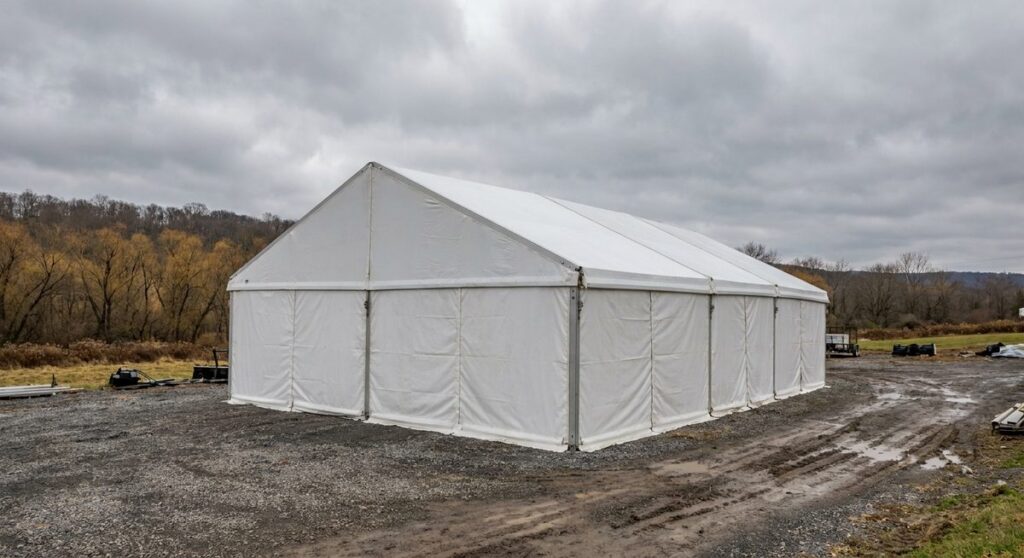
The difference is measured in stakes. A celebration tent has to look beautiful for a weekend. An emergency tent rental has to stand up to sustained wind loads, driving rain, and continuous 24/7 occupancy — sometimes for weeks — while housing people, equipment, or patients who have nowhere else to go. That calls for aluminum-framed structure tents rated for serious weather, engineered anchoring, and a crew that can install in adverse conditions rather than waiting for a clear forecast.
Who Relies on Rapid-Deployment Structures
Across the Philadelphia metro and the broader tri-state region, disaster-response tenting supports a wide range of missions:
- Healthcare surge capacity. Hospitals and urgent-care networks use climate-controlled tents for triage, testing, overflow bedding, and vaccination or screening clinics when interior space runs out.
- Government and municipal operations. Emergency management agencies stand up command centers, staging areas, and points of distribution (PODs) for water, food, and supplies after a storm.
- Military and federal use. Equipment cover, personnel shelter, and mobile operations bases require structures that meet strict durability and fire-safety standards.
- Business continuity. When a warehouse roof fails or a production line floods, companies use temporary structures to keep operations running while permanent repairs are made. The federal preparedness guidance at Ready.gov treats this kind of contingency planning as core to any continuity strategy.
The common thread is urgency. These clients are not planning twelve months out — they need boots on the ground fast, and they need the structure to perform the moment it is up.
Engineering, Safety, and Code Compliance
Emergency structures live or die on their engineering. EventQuip’s in-house expertise covers the load calculations, ballasting, and anchoring plans that separate a safe temporary building from a liability. Structure tents use rigid aluminum framing that can span large clear areas without interior poles — critical when you need open floor space for cots, vehicles, or triage bays.
Fire safety is non-negotiable. Tent fabrics used in occupied public and emergency settings should meet flame-propagation standards such as NFPA 701, published by the National Fire Protection Association. That certification, combined with permitted engineering drawings, is often what a fire marshal or local code official will ask for before an emergency structure can be occupied. Working with a rental partner that already documents this is what keeps a deployment from being red-tagged on day one.
Climate Control and Power Are Part of the Package
A shelter is only useful if people can actually live and work inside it. That is why emergency deployments almost always pair the structure with support systems. Climate-controlled tenting delivers heating for winter operations and cooling for summer surges, keeping interior conditions safe for patients, staff, and sensitive equipment alike.
Power is equally critical, especially when the grid is exactly what failed. Generator rental and power distribution let a site run lighting, HVAC, medical devices, and communications independent of local utilities. Add interior and exterior lighting for round-the-clock operations, and the tent becomes a genuine functional facility rather than just a roof.
Why Speed and Local Presence Matter
In an emergency, logistics are everything. A vendor three states away cannot help you at 2 a.m. EventQuip’s location in Montgomeryville puts crews within reach of Philadelphia, the Lehigh Valley, South Jersey, and northern Delaware — the same footprint most regional emergencies span. Local inventory of structure tents, flooring, climate units, and generators means the components are on the shelf and ready to roll, not waiting on a cross-country freight order.
Planning ahead helps, too. Agencies and facilities managers who establish a relationship before hurricane or nor’easter season move to the front of the line when demand spikes. A pre-season walkthrough — reviewing likely deployment sites, power needs, and anchoring options — turns a chaotic scramble into a defined, executable plan.
Plan Your Emergency Tenting Before You Need It
Storm season does not send a calendar invite. The organizations that weather it best are the ones that already know who to call and what will be deployed. Whether you manage a hospital, a municipality, a military installation, or a business that cannot afford downtime, EventQuip has the engineered structures, support systems, and regional crews to respond when it counts.
Talk to EventQuip About Disaster-Response Tenting
Request an emergency tenting consultation
EventQuip — 1084 Bethlehem Pike, Montgomeryville, PA 18936 — https://www.eventquip.com