Commencement is the biggest single-day event most universities host all year. Thousands of graduates, families and guests, a fixed date that can’t move, and spring weather in Eastern Pennsylvania that can swing from sunshine to thunderstorms in an afternoon.
That’s why experienced event and facilities teams don’t wait until spring. They lock in university graduation tent rentals in the fall. If your school, college or prep academy is planning a May or June 2027 ceremony in the Philadelphia region, here’s what to know.
Why Fall Is the Time to Book Commencement Tents
Graduation season in the Mid-Atlantic is compressed into a handful of weekends. Universities, high schools, private academies and corporate events all compete for the same large-format tents, flooring and power on the same dates.
Booking in the fall helps you:
- Secure the right inventory. Large clear-span structure tents and the flooring, staging and generators that go with them are limited.
- Finish site planning early. Surveys, layouts and CAD drawings take time, especially on historic campuses.
- Allow for permits. Large tents typically require local permits and fire marshal review, which can’t be rushed.
- Budget accurately. Locking in specs early gives your finance team firm numbers for the next fiscal cycle.
Choosing the Right Tent for Commencement
Structure Tents for Main Ceremonies
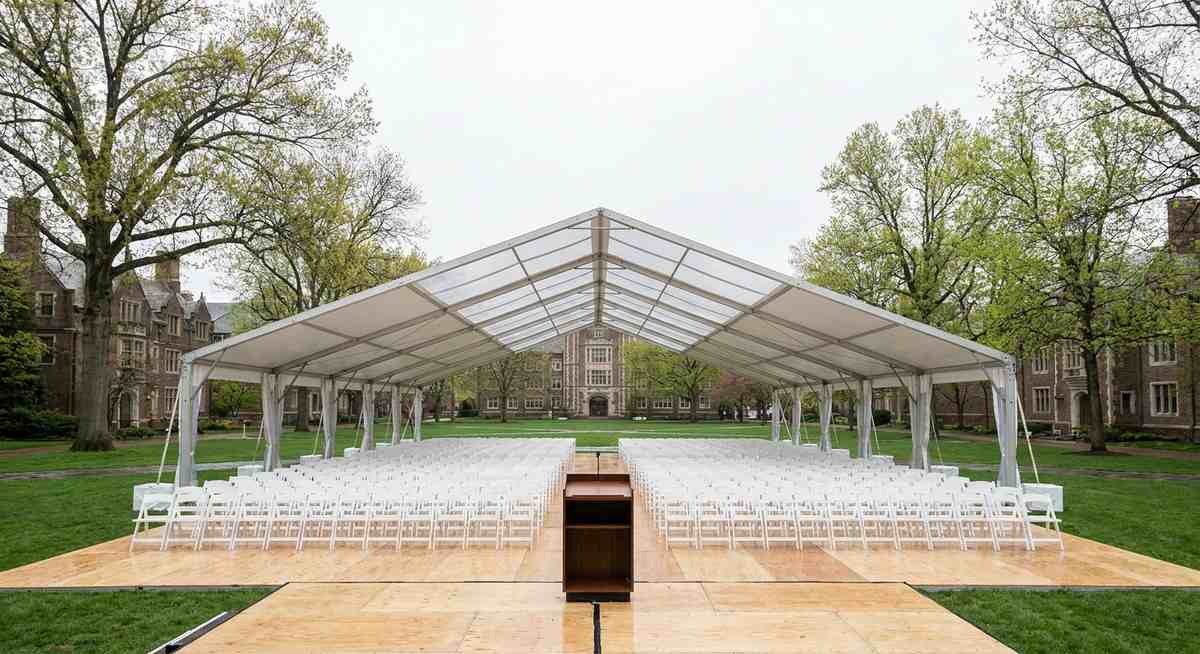
For large audiences, structure tents are the standard. Their aluminum frames create clear-span interiors with no center poles, so every guest has an open sightline to the stage. They can be engineered for wind loads, anchored on many surface types, and sized from a few hundred guests to several thousand.
Clear-Top Tents for Receptions
For departmental receptions, honors ceremonies or donor events, clear-top tents let guests enjoy the campus setting while staying protected from rain.
Frame Tents for Support Areas
Smaller frame tents work well for registration, robing areas, ADA seating overflow, press, refreshments and first aid stations.
The Infrastructure That Makes Commencement Work
A tent is only the start. A successful ceremony depends on what goes inside and around it.
Flooring and Staging
Spring lawns are often soft and muddy. Professional event flooring creates a level, stable surface for chairs, wheelchairs and walkers, and protects campus turf. Sturdy staging gives graduates a safe, accessible platform to cross.
Power, Lighting and Climate Control
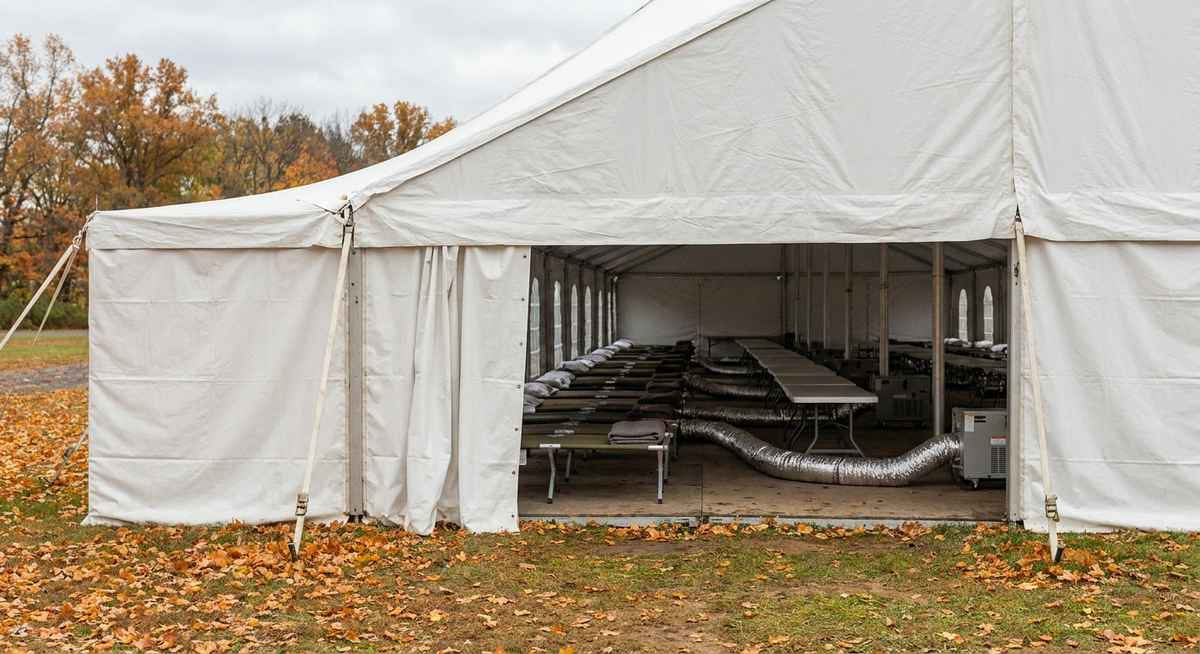
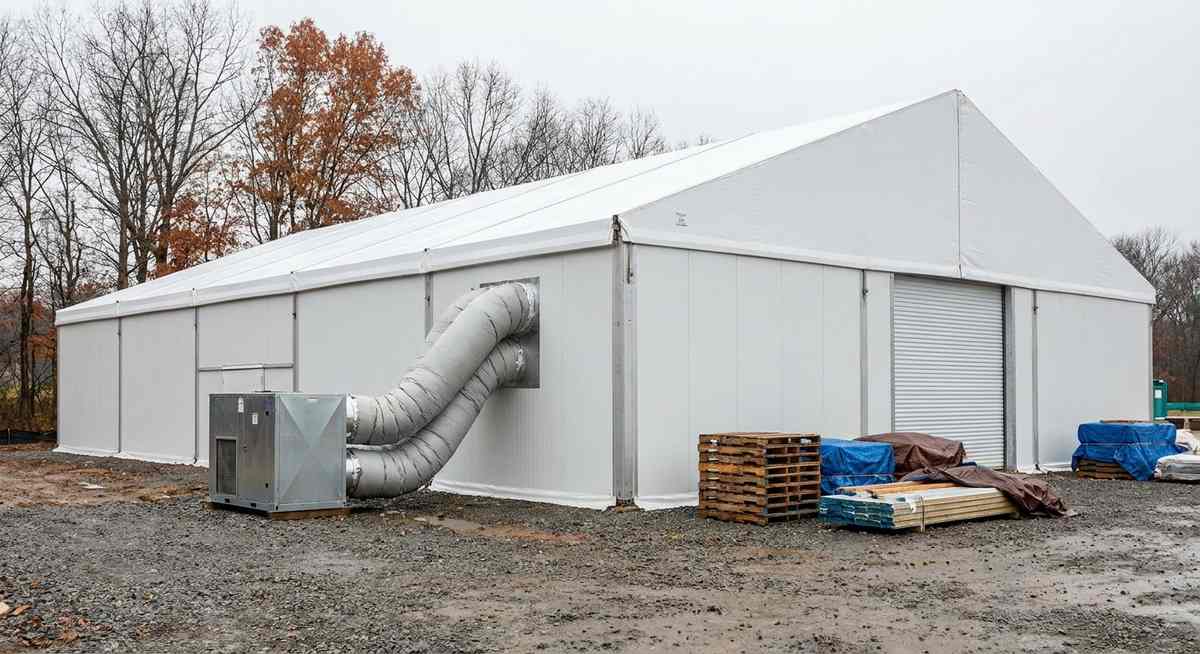
Sound systems, video screens, livestream equipment and lighting all need reliable power. Plan for dedicated power and generators with proper distribution. For early-season or evening ceremonies, climate control can keep guests comfortable through cool mornings or unexpected heat.
Accessibility
Commencement guests include grandparents, guests with disabilities and families with strollers. Plan accessible routes, level flooring, ramps to the stage and designated seating areas. The ADA’s guidance for event and facility accessibility is a helpful reference for your planning team.
Safety and Weather Planning
Spring in Eastern Pennsylvania can bring strong winds and thunderstorms. Every large tented event should have a clear weather plan.
- Monitor forecasts closely. The National Weather Service Philadelphia/Mount Holly office provides local forecasts and severe weather alerts for the region.
- Know your wind thresholds. Your tent provider should share the engineered limits for your structure and the plan if winds approach them.
- Have an evacuation plan. Designate shelter locations, communication methods and staff responsibilities. EventQuip provides evacuation planning support for large events.
- Follow fire code requirements. Tents must meet flame-resistance standards and include proper exits, signage and fire extinguishers. The NFPA 102 standard covers grandstands, folding seating and tents.
Guest Experience Details That Matter
The best commencement tents feel like part of the campus, not a temporary add-on. A few details make a big difference for graduates and families:
- Clear sightlines and video support so guests in the back rows can see every name called
- Comfortable aisles and seating layouts that allow families to find seats quickly
- Shaded waiting areas for guests who arrive early
- Covered walkways between the main tent, restrooms and reception areas in case of rain
- Lighting for evening ceremonies and post-ceremony receptions
Thinking through the guest journey early helps your team avoid last-minute changes and keeps the day running smoothly.
A Fall-to-Spring Commencement Timeline
- October to December: Confirm dates, guest counts and budget. Request a site visit and reserve tents and equipment.
- January to February: Finalize layouts and CAD drawings. Submit permit applications.
- March to April: Confirm AV, power, accessibility and weather plans. Coordinate with campus security and facilities.
- Ceremony week: Installation, inspections and final walkthrough.
Our checklist for success walks through the details planners often overlook.
Why Universities Trust EventQuip
EventQuip has supported tens of thousands of events over more than 30 years, from elegant weddings to military and emergency deployments. That technical background matters on commencement day, when there’s one day, one event and one chance to get it right.
- Large-format structure tents with clear-span interiors
- Flooring, staging, lighting, power and climate control from one provider
- Engineering support, CAD drawings and permit coordination
- Experienced crews serving Philadelphia, Eastern PA, New Jersey and Delaware
Reserve Your 2027 Graduation Tent Now
Commencement dates fill fast. Start planning now and give your graduates the ceremony they’ve earned.
Request a commencement tent quote from EventQuip
EventQuip — 1084 Bethlehem Pike, Montgomeryville, PA 18936 — https://www.eventquip.com