Emergencies rarely give notice. A winter storm knocks out power to a shelter. A hospital needs extra triage space during a busy respiratory season. A county needs a warming center by tonight, not next week. When that call comes, the organizations that respond fastest are the ones that planned their temporary space months earlier.
EventQuip is known for luxury wedding and gala tents across the Philadelphia region, but our emergency and government division has supported response operations for decades. Here’s how agencies, hospitals and facility managers in Eastern Pennsylvania, New Jersey and Delaware can get winter-ready now.
Why October Is the Time to Plan
Once the first nor’easter is in the forecast, every generator, heater and tent crew in the region is in demand at the same time. Planning in October lets you:
- Pre-qualify a vendor and finish paperwork, insurance certificates and site details before a crisis
- Identify and survey your sites, including ground conditions, utilities and access routes
- Lock in climate control, because heat is the piece that’s hardest to source on short notice
- Fold the plan into your drills so your team knows exactly what arrives and where
The Pennsylvania Emergency Management Agency encourages organizations to build and exercise continuity plans before severe weather, and FEMA’s Ready.gov winter weather guidance highlights power outages and dangerous cold as two of the biggest winter risks. Temporary heated structures are one way to address both.
Common Uses for Emergency Tents
Emergency tents aren’t just for disasters on the news. Across our region we’ve seen them used for:
- Medical surge and triage. Hospitals and urgent-care networks add overflow space for screening, testing or triage during busy seasons.
- Warming and cooling centers. Municipalities stand up heated shelters when power fails or temperatures drop.
- Mass-care and feeding stations. Relief organizations need covered space for meals, supplies and registration.
- Command posts and staging. Response teams need a dry, lit, powered space to coordinate.
- Vaccination and testing sites. Drive-through and walk-up clinics need weather protection for staff and the public.
- Facility continuity. When a building is damaged by fire, water or a roof failure, a temporary structure keeps operations running.
Choosing the Right Tent for Winter Response
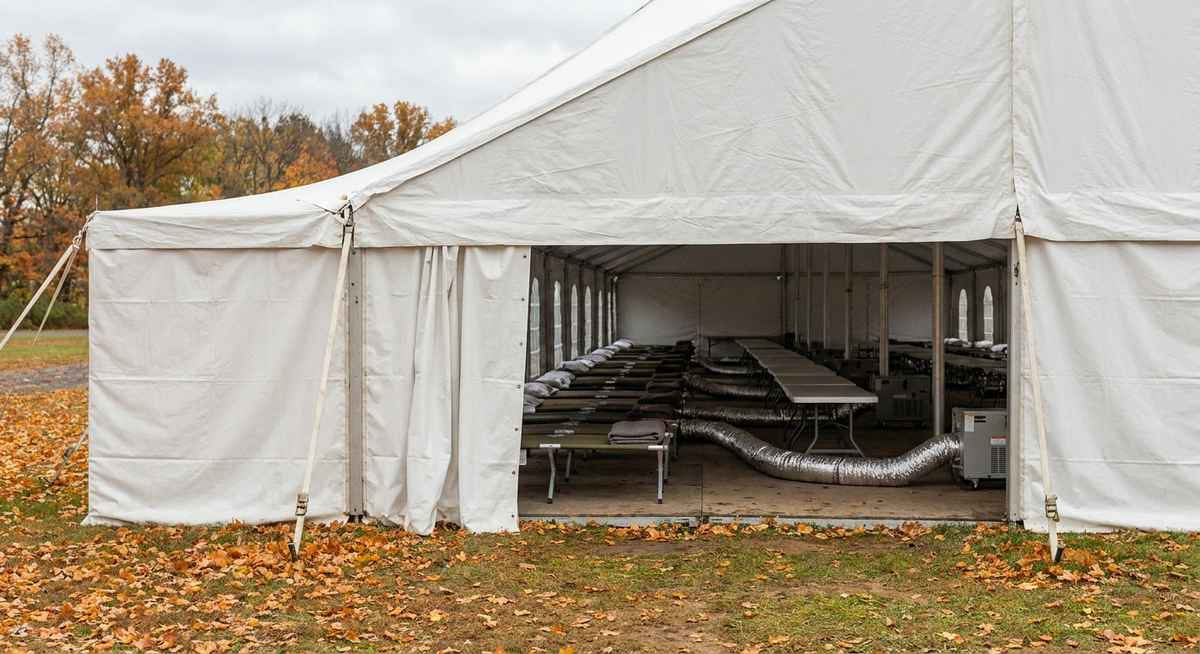
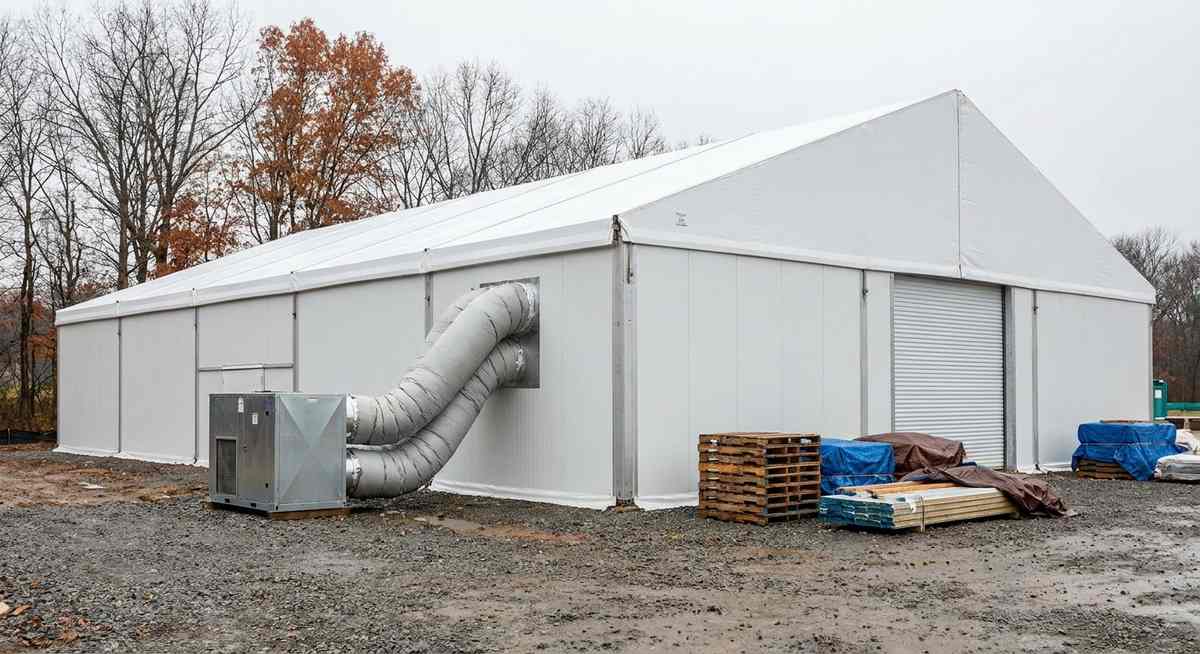
Not every tent belongs in a Pennsylvania January. For cold-weather emergency use, we usually recommend structure tents because they’re freestanding, engineered for wind and snow loads, and offer clear interior space with no center poles. They can be installed on grass, gravel or pavement and paired with hard sidewalls and lockable doors.
For faster, smaller deployments, our dedicated emergency tent systems are designed for quick setup and teardown.
Heat, Power and Flooring: The Details That Matter
The tent is only the shell. What makes it usable in winter is everything inside:
- Heating and HVAC. Our climate-control equipment is sized to the tent volume and expected occupancy, with ducting that keeps heat where people are.
- Power. Generators and power distribution keep heat, lighting and medical equipment running when the grid doesn’t. See our power and generator options.
- Flooring. A raised floor keeps people and equipment off frozen or muddy ground and improves accessibility for wheelchairs and stretchers.
- Lighting. Bright, even lighting is essential for medical work and safe movement at night.
Safety, Permits and Evacuation Planning
Emergency structures still need to be safe structures. Before an installation, our team reviews anchoring, wind ratings, fire separation, exit locations and heater placement. We also help clients document evacuation plans and provide CAD drawings that local fire marshals and code officials can review quickly. In a true emergency, having those drawings ready can shave hours off approvals.
Questions to Answer in Your Plan Now
A strong emergency tent plan answers a handful of practical questions before anyone is under pressure:
- Where will the structure go? Identify a primary and a backup site, and note ground surface, slope and drainage.
- How many people will it serve? Occupancy drives tent size, exit count, heating capacity and restroom needs.
- What utilities are available? Know whether you can tie into building power or will need generators and fuel.
- Who approves it? List the local fire marshal, code official and internal decision-makers so approvals move quickly.
- How long will it stay? A 72-hour warming center and a three-month surge facility need very different specifications.
Our team can walk your site with you and turn these answers into a pre-approved layout you can activate on short notice.
What Sets EventQuip Apart for Emergency Work
- 30+ years and tens of thousands of installations across Eastern PA, NJ and DE
- A dedicated emergency services division experienced with government, military and medical clients
- In-house tents, heat, power, flooring and lighting, so one call covers the full package
- Engineered structures that meet the safety expectations of code officials
Start Your Winter Readiness Plan
The best time to plan emergency space is when there’s no emergency. Talk with our team now about site surveys, pre-approved layouts and climate-control packages so you’re ready when the call comes.
Talk with EventQuip about emergency tent planning
EventQuip — 1084 Bethlehem Pike, Montgomeryville, PA 18936 — https://www.eventquip.com