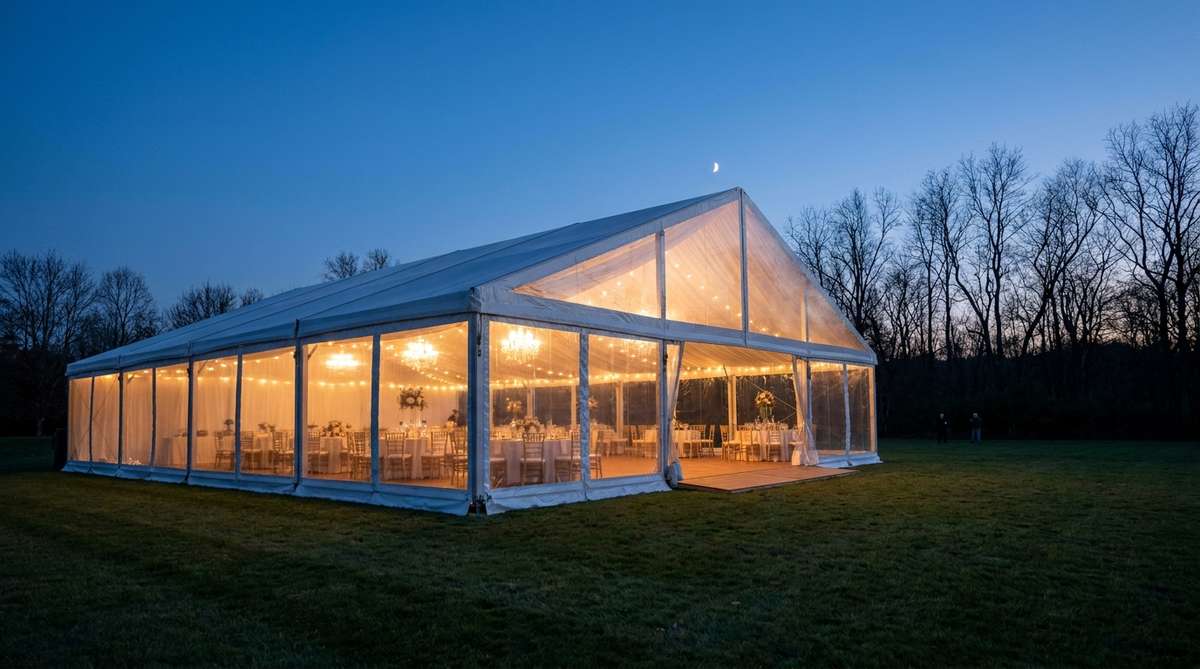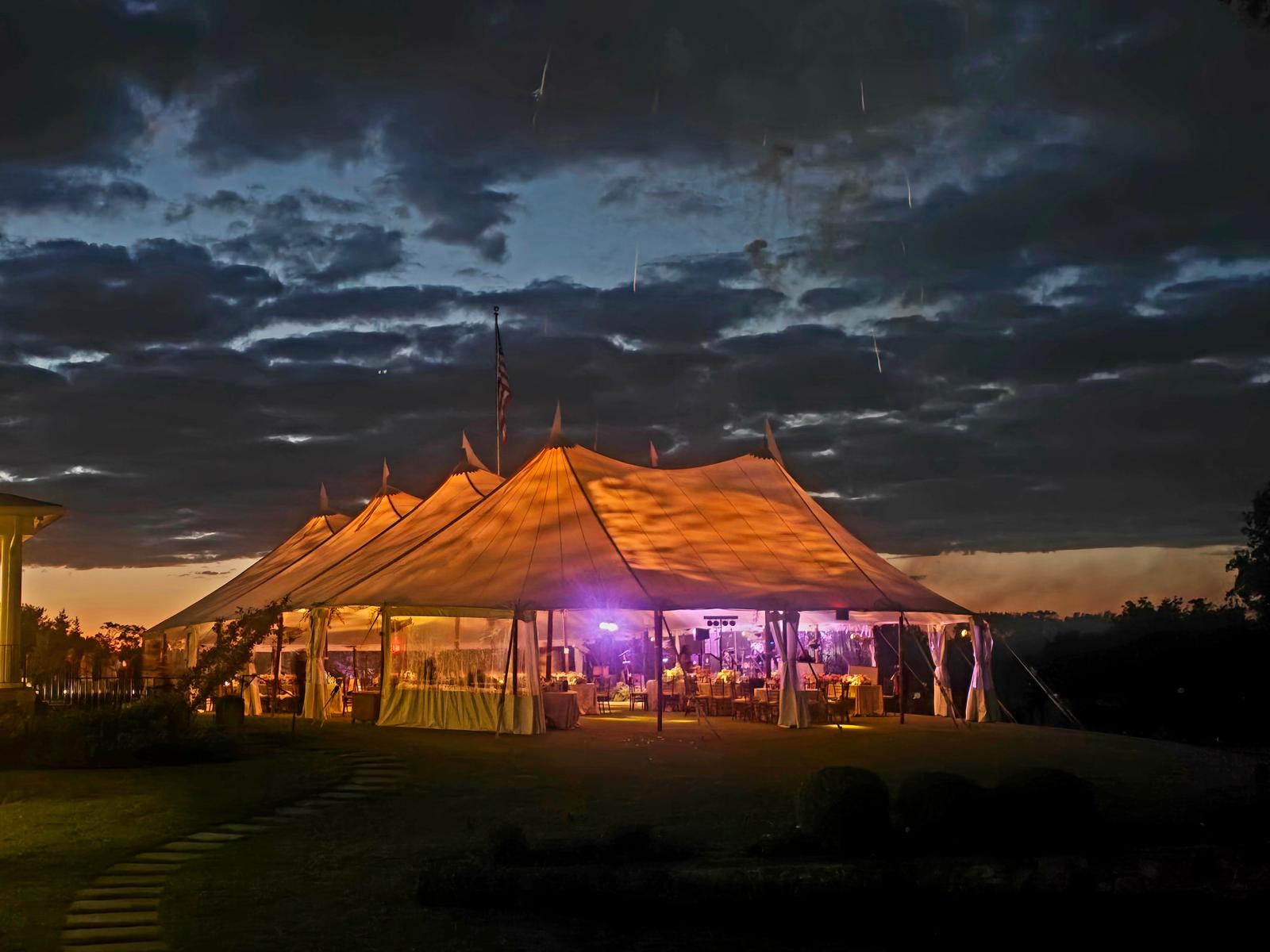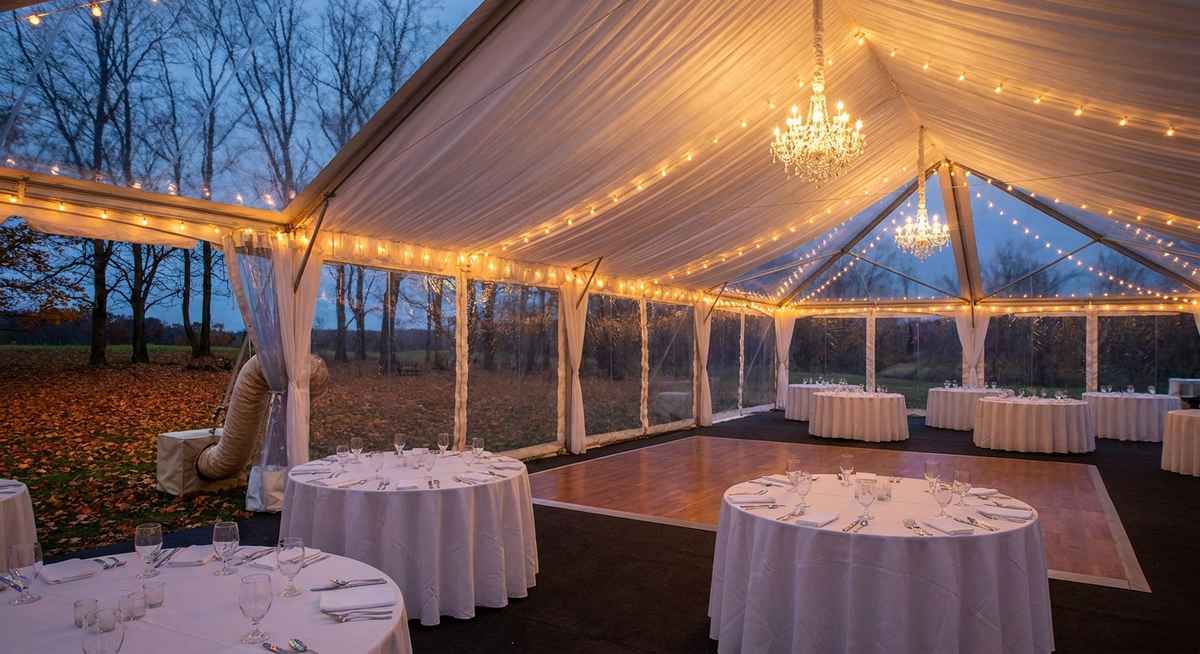
Most people think of tents as something for weddings and galas. But every fall, some of the most important tent projects in the Philadelphia region have nothing to do with celebrations. They’re about keeping work moving when the weather turns — protecting a pour, sheltering a crew, staging materials, or adding temporary space to a building that’s run out of room.
With October arriving, general contractors, facility managers, and operations teams across Eastern Pennsylvania, New Jersey, and Delaware are making their winter plans now. Here’s how a commercial tent rental fits into that plan.
Why Winter Planning Starts in the Fall
Winter in the Delaware Valley brings freezing nights, wind, snow, and short daylight hours. Each of those slows down outdoor work. Concrete and masonry need controlled temperatures to cure correctly. Finishes and coatings have minimum application temperatures. Crews lose productivity — and face real safety risk — in wind and cold.
Waiting until the first hard freeze to call for an enclosure is how projects end up behind. Engineered structures need site assessment, layout, permitting coordination, and scheduling for installation crews. Planning in late September and October gives you the best selection of sizes and a clean install before the weather forces the issue.
Common Commercial and Construction Uses
EventQuip has supported the construction industry for years alongside our event work. Common winter applications include:
- Weather enclosures over active work areas, foundations, or building sections
- Heated staging and material storage to keep supplies dry and at workable temperatures
- Temporary crew shelters and break areas close to the work zone
- Warehouse and retail overflow during peak season inventory
- Temporary loading and receiving areas
- Temporary facilities during renovation of offices, schools, or healthcare spaces
Because we also run dedicated military, government, and emergency services divisions, we’re used to projects where reliability isn’t optional and the timeline doesn’t move.
Why Structure Tents Are the Standard for Winter Work
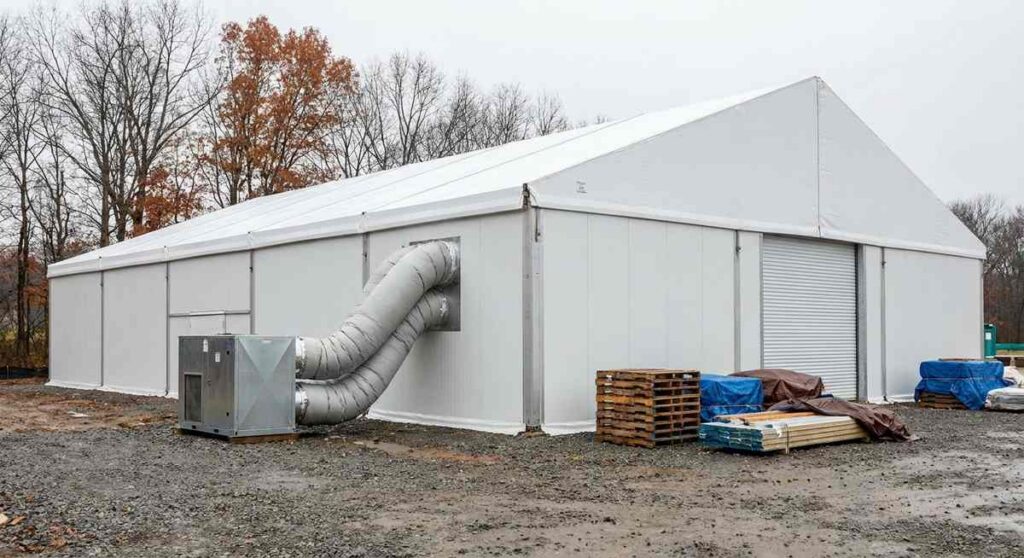
Not every tent is built for a Pennsylvania January. Pole tents rely on stakes and tension and aren’t designed for winter loads. For commercial and construction applications, the go-to solution is a structure tent — an aluminum-framed, clear-span system engineered for wind and designed to be anchored to a variety of surfaces.
Key advantages:
- Clear-span interiors with no center poles, so equipment and materials can move freely
- Engineered frames with documented wind ratings
- Hard-wall and solid-wall options that hold heat far better than fabric sidewalls
- Doors, including roll-up and personnel doors, for vehicle and foot traffic
- Scalable sizes that can grow as the project does
We can provide sample CAD drawings so your team, your engineer, and your local permitting office can see exactly what’s going on site.
Heating a Tent the Right Way
Heat is where winter enclosure projects succeed or fail. Our climate control and HVAC systems are sized to the structure, the insulation value of the walls, and the temperature you need to hold.
Some basic principles:
- Use indirect-fired heaters for enclosed, occupied spaces. The combustion happens outside the tent and only clean, warm air is ducted inside.
- Size for the worst night, not the average day. A heater that works in October may not keep up in January.
- Plan for power and fuel. Fans, lighting, and controls need reliable electricity; fuel deliveries need a schedule. Our power and generator rentals can support sites without adequate service.
- Monitor and ventilate. Carbon monoxide and fire safety must be part of the plan whenever fuel-burning heaters are on site.
The OSHA cold stress guidance is a useful reminder of why heated shelter matters: workers exposed to cold, wind, and wet conditions are at risk of hypothermia, frostbite, and other cold-related injuries. A warm, dry enclosure is a safety measure, not just a comfort.
Snow, Wind, and Winter Weather
Engineered structures are designed with specific load ratings, but every temporary structure needs an active winter weather plan. That means maintaining heat to help shed snow, monitoring forecasts, and following the manufacturer and engineer’s guidance for clearing snow and responding to high-wind events. The National Weather Service winter safety resources are a good starting point for teams building their site weather procedures.
We’ll walk your team through the operating guidelines for your structure before we leave the site.
Permits and Site Requirements
Temporary structures in Pennsylvania typically involve local building and fire officials, especially for larger footprints, heated spaces, or areas occupied by workers or the public. Requirements vary by municipality. EventQuip helps by providing engineering documentation, layouts, and product specifications so the approval process goes smoothly. Anchoring method, surface type, exits, fire extinguishers, and heater placement are all part of the conversation.
Short-Term vs. Season-Long Rentals
Some projects need an enclosure for a few weeks; others need it from November through March. We offer flexible rental terms and have completed projects ranging from a few thousand dollars to more than a million. For longer needs, a semi-permanent configuration with hard walls, flooring, lighting, and HVAC can function much like a temporary building.
Plan Your Winter Enclosure With EventQuip
With more than 30 years of experience and tens of thousands of installations across the region, EventQuip brings the same engineering discipline to a construction site that we bring to a black-tie gala. One day, one project, one chance to get it right.
Request a quote for a winter commercial tent rental
EventQuip — 1084 Bethlehem Pike, Montgomeryville, PA 18936 — https://www.eventquip.com